

Your website is getting traffic. You can see the numbers ticking up in Google Analytics. People are finding you.
So why isn’t your phone ringing?
Here’s the hard truth most small business owners don’t want to hear: your website probably isn’t broken. It’s just confusing.
And confusion kills conversions faster than an ugly design ever could.
Welcome to the first post in our new Clarity Audit Series: where we help you diagnose what’s actually stopping visitors from becoming leads. No fluff. No guesswork. Just a simple framework you can run in 15 minutes flat.
The Real Problem: Clarity Comes First
Most business owners assume low leads mean they need a new website. New colors. New photos. A complete overhaul.
But here’s what the research actually shows: users form impressions in less than a second. If they can’t immediately understand what you do, who you help, and what to do next: they’re gone.
Your website doesn’t need to be prettier. It needs to be clearer.
“When your site fails the clarity test, visitors cannot quickly determine if you can help them, so they leave.”
That’s why we built this 15-minute audit around three simple tests. Think of them as a diagnostic tool for your homepage: a way to see your site through a stranger’s eyes.
Ready? Grab your phone, open your website, and let’s get to work.

Test #1: The 5-Second Test
The Question: Can a complete stranger tell what you do and how to buy it in five seconds?
Here’s how to run it:
- Open your homepage on your phone (not desktop: most visitors are mobile).
- Show it to someone who’s never seen your site before.
- After five seconds, take it away.
- Ask them: “What does this business do? What are they selling? What should I do next?”
If they can’t answer all three questions, you’ve got a clarity problem.
Why This Matters
Your headline and first paragraph carry the weight of your entire website. If a visitor has to scroll, squint, or guess: they won’t. They’ll bounce.
Actionable Tip: Your homepage headline should complete this sentence: “We help [specific audience] achieve [specific result].” If your headline is vague (“Welcome to our site!”) or clever but confusing (“Solutions for Tomorrow”): rewrite it today.
Test #2: The “So What?” Test
The Question: Are you talking about your features or their results?
This is where most small business websites fall flat. They describe what they do without explaining why it matters.
Here’s an example:
❌ Feature language: “We offer comprehensive web design services.”
✅ Results language: “We build websites that turn visitors into paying customers: without the tech headaches.”
See the difference? One talks about you. The other talks about them.
How to Run This Test
Read through your homepage copy. Every time you see a feature or service description, ask yourself: “So what? Why should the reader care?”
If you can’t immediately answer that question, neither can your visitor.
Why This Matters
People don’t buy services. They buy outcomes. They buy relief from pain. They buy the version of their business that’s finally getting consistent leads.
Your job is to paint that picture: not list your credentials.
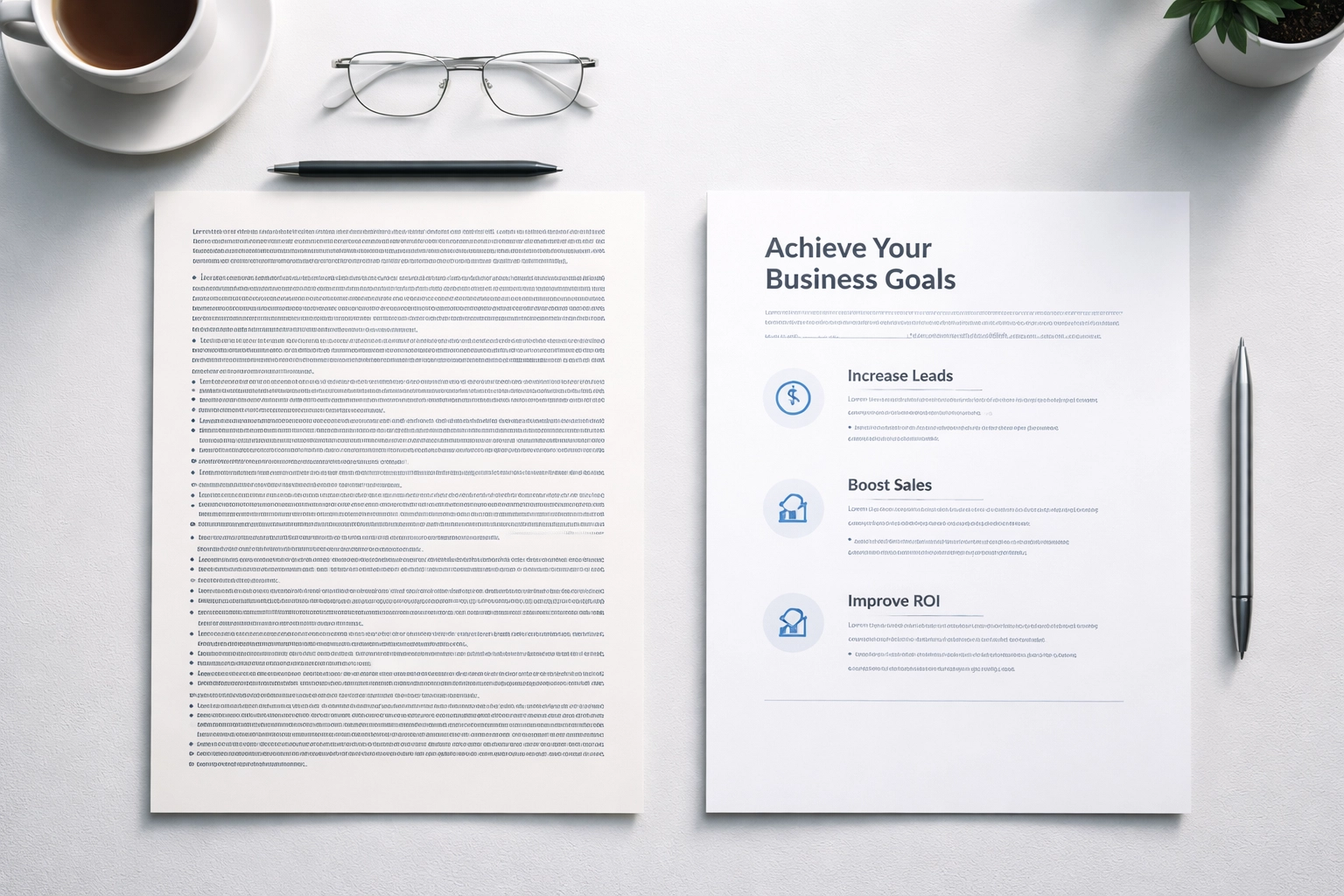
Actionable Tip: For every feature you mention, add a “which means…” statement. “We offer 24/7 support” becomes “We offer 24/7 support, which means you’ll never lose a customer to a website issue over the weekend.”
Test #3: The Friction Test
The Question: How many clicks does it take to give you money?
This one’s brutal: but necessary.
Pull up your website and pretend you’re a motivated buyer. You want to hire this business. Now try to do it.
- How many clicks to find your services?
- How many clicks to see your pricing (or at least a “starting at” range)?
- How many clicks to actually contact you or book a call?
Every extra click is friction. Every moment of confusion is an exit opportunity.
The Rule of Three
Your call-to-action should appear at least three times on every key page:
- Above the fold (before they scroll)
- Mid-page (after you’ve built some value)
- At the bottom (for the convinced reader)
If you’ve only got one tiny “Contact Us” link buried in your footer: you’re losing leads who were ready to reach out.
Why This Matters
Visitors should never have to guess what to do next. The path from “interested” to “inquiry” should be obvious, easy, and frictionless.
Actionable Tip: Add a clear CTA button to the top of your homepage that says exactly what happens when they click. “Get a Free Quote” beats “Contact” every time.
Putting It All Together: Your 15-Minute Audit Checklist
Here’s your quick-reference version:
- 5-Second Test: Can a stranger identify what you do, who you help, and what to do next: in five seconds?
- “So What?” Test: Does your copy focus on results and outcomes, not just features and services?
- Friction Test: Can a motivated buyer contact you in three clicks or less? Is your CTA visible at least three times on key pages?
If you checked all three boxes: congrats. Your website clarity is solid.
If you didn’t? Don’t panic. You just identified exactly where to focus your energy.

What Comes After the Audit?
Running these tests is the easy part. The harder question is: what do you do with what you find?
This is where most small business owners get stuck. They know something’s off, but they don’t have a clear plan to fix it: or to prevent the same problems from creeping back in six months.
That’s exactly why we created the GrowthMap.
Think of it as the roadmap that turns today’s audit into tomorrow’s results. Instead of random website tweaks and hoping for the best, the GrowthMap gives you a prioritized, month-by-month strategy for building a website that actually converts.
Clarity first. Research first. Action second.
If you’re tired of guessing why your website isn’t working: and you’re ready for a clear path forward: the GrowthMap is your next step.
Coming Up Next in the Clarity Audit Series
This is just the beginning. Over the next few posts, we’ll dig deeper into each piece of your digital presence:
- Google Business Profile Audit: Are you showing up when locals search for what you do?
- Content Clarity Audit: Is your blog helping you get found: or just taking up space?
- Trust Signal Audit: Do visitors believe you can actually deliver?
Each post will give you the same thing: a simple, actionable framework you can run yourself in 15 minutes or less.
Because website conversion optimization for small business doesn’t have to be complicated. It just has to be clear.
Ready to Stop Guessing?
If you’ve run the audit and realized your website needs more than a few quick fixes: we’re here to help.
Book a free discovery call and let’s talk about what’s actually standing between you and consistent leads.
No pressure. No jargon. Just clarity.
This post is part of the Clarity Audit Series from Bearnedheart Web Services. Want to learn more about building a digital strategy that works? Check out our guide to digital strategy for small businesses or explore our services.